jazzy Dude
A PSOC Based Digital Saxophonoe/Piano/Jazz Synthesizer,
https://youtu.be/IEKbe4mpJPY

Jazzy Dude was my final project for MIT’s Microcomputer Class (6.115/6.2060). In this class we did embedded-systems labs from scratch with a 8051 microcontroller, a lot of assembly, and circuits that forced us to understand everysingle bit of the circuit/code/cassembly. For my final project I decided to build a instrument synthesizer on the Cypress PSoC 5LP. The end goal was that it could either be played live, producing a saxophone-like timbre (with a low sample rate piano as a backup voice), or could automatically jazz standards that you could transpose into any key and adjust to any tempo.
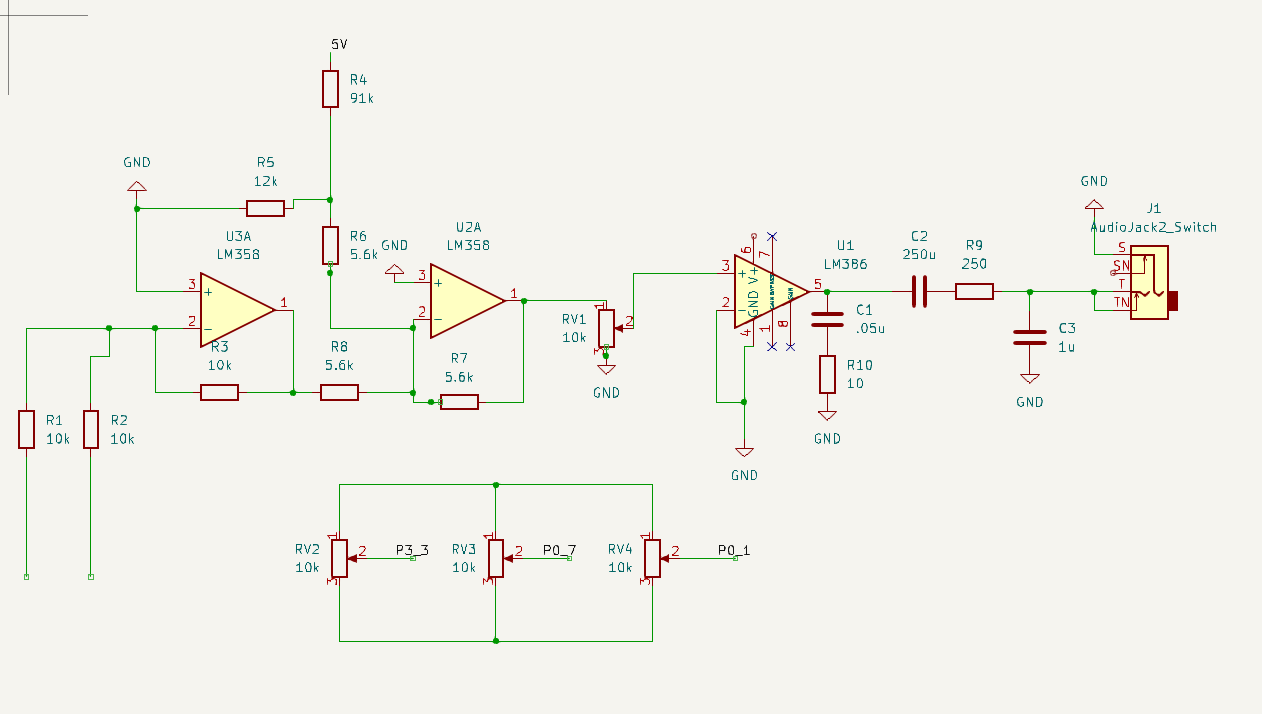
The first battle was just getting audio out of the thing. I had to design and wire the whole audio pipeline(getting AC signals into a mcu and amplifying them is very fun) so shifting and buffering the signal with opamps(LM358), feeding it into an audio amplifier(LM386, which also might be my fav non-rf packaged ic btw), and then routing that out through a 3.5 mm jack.
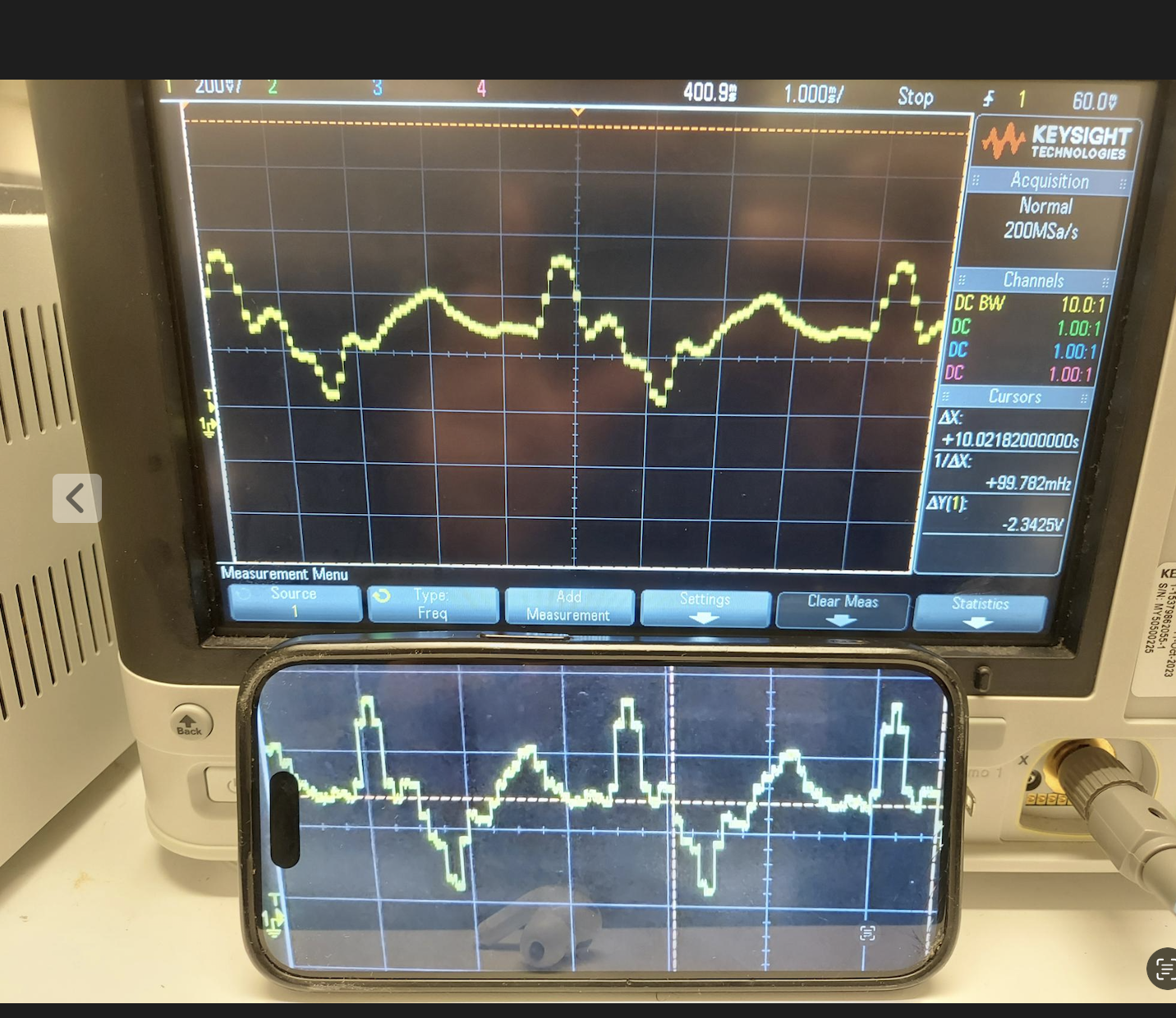
Once the audio circuit was working, I moved on to the actual synthesis stage. I started by ripping a clean two second sax note online, then started scripting some nice python code that used numpy to abstract away fft’s for me. I isolated one period of the waveform so it could loop. I normalized it to ±1 and quantized it to 8-bit values (0–255) in a nice csv that could be read from the microcontroller.I ran a Fourier transform, kept only the lowest few harmonics, and then did an inverse FFT to rebuild the wavetable. I also swept the number of harmonics (1, 2, 5, 10, 20, 30, 40) so I had a variety to pick from(and so I had graphs for my lab notebook). But just iterating through the samples in hardware, sounded robotty and like not musicy , which meant I had to do what every synthesizer blog raves about ADSR(Attack Decay Sustainn and Release baby). The one issue is at the time I was using the PSOC’s built in wavedac where you could just drop in a csv, and it loops over values and spits out analog values. Which meant there was no way to work in amplitude modulation.
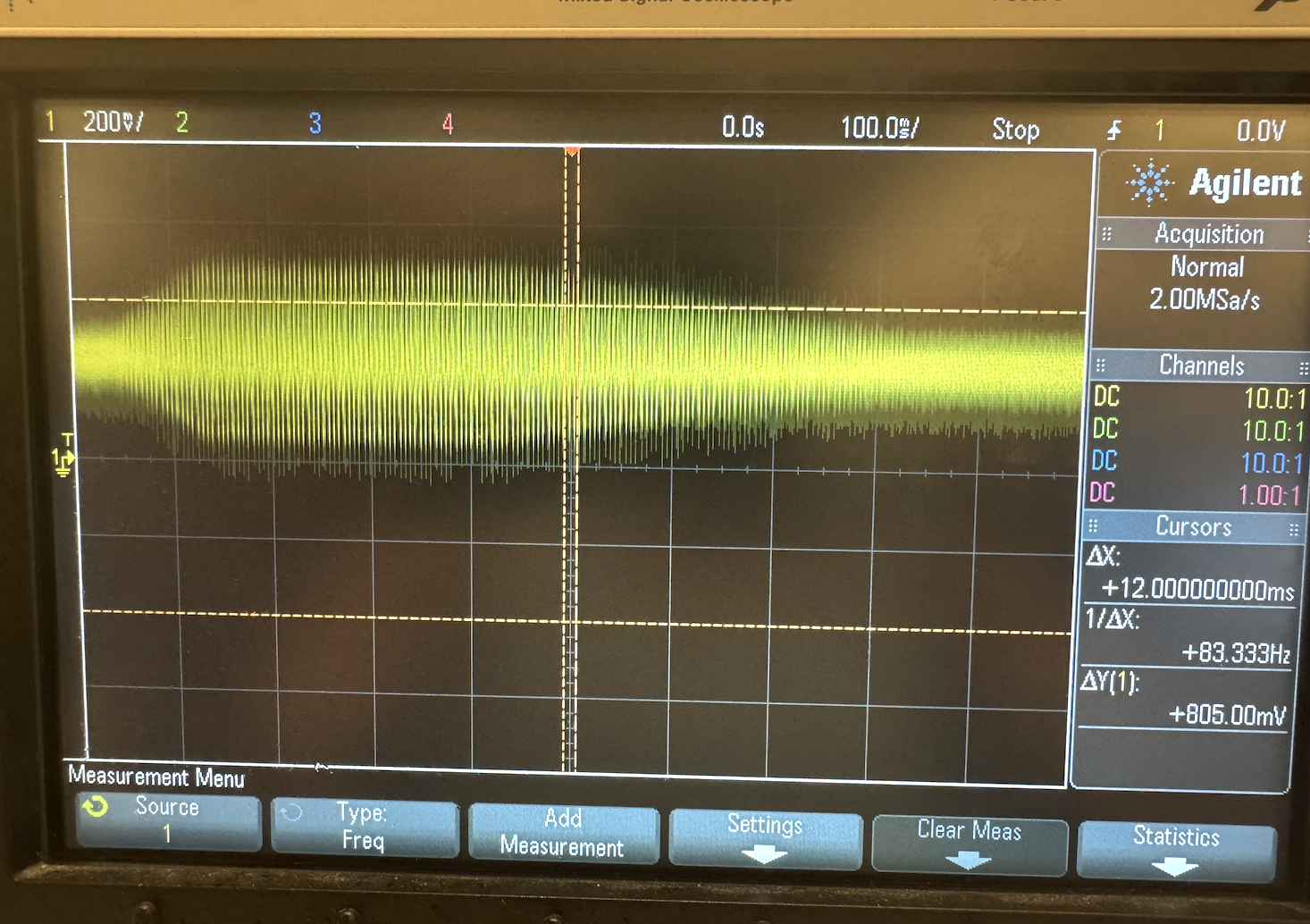
That’s where Direct Digital Synthesis (DDS) came in. Getting DDS working was honestly pretty simple, just a phase accumulator stepping through the wavetable, and it gave me a awesome way to play with the signal before it came out of the board(as opposed to the cringe PsOC wave table built in).I just needed to multiply the amplitude of the signal coming out of hte DDS by a time varying envelope. I built the ADSR as a small state machine in C with case statements stepping through attack, decay, sustain, and release, with a dt variable keeping track of elapsed time. Getting the timing right was more annoying than I expected; if the decay was slightly too long, short notes (like 16th notes) sounded muddy. .
Once I got any note I wanted coming out, I added a few extra credit features. I wrote helper functions that could schedule notes, bars, and even whole charts, so the synthesizer could “perform” pieces on its own(ie actually hitting my stretch goal lolz). The songs were stored as 2D arrays of note structs (pitch, duration, velocity), which made it easy to transpose them to any key or speed. I also wired in potentiometers so you could set the BPM and shift the key on the fly, which made demos a lot more fun since you could slow down or speed up a tune in real time without reflashing the board. And you could switch between 8 tunes just by turning a potentiometer. Then yippee i finished my final project and could finally sleep.
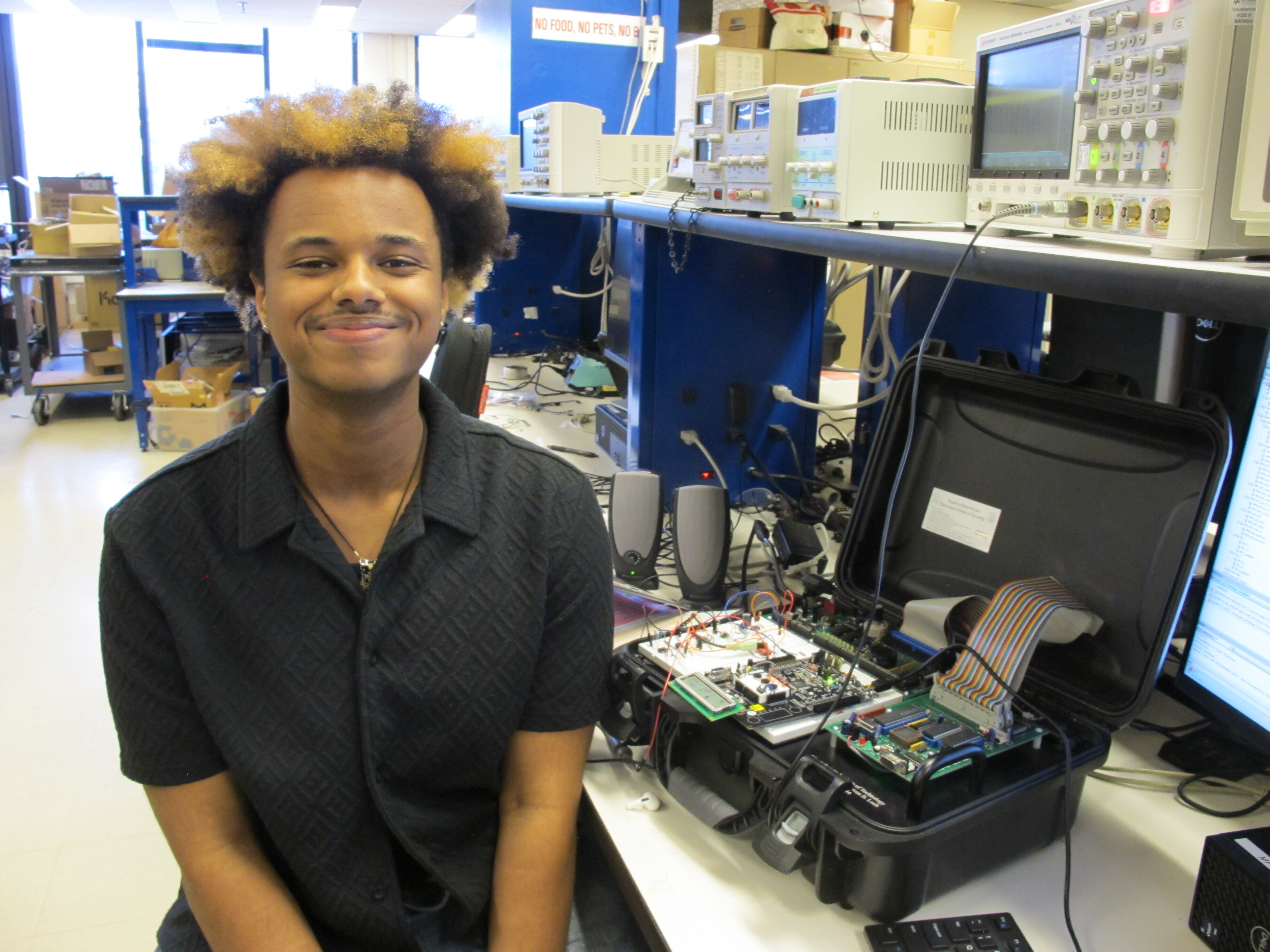
Me with my project, I really enjoy this photo, I'm mildly proud there was a lot more ambitous things I wanted to do, but those were me being a crazy person. This project kind of has a special place in my heart, cause it was my first solo end to end project. I wrote the whole thing myself, I went to offie hours and got help from course staff and friends but since projects are so specific people can only help so much. It felt really satisfying end to ending a system from circuits to a bunch of C code, and messing with timing constraints in PSOC's clock manager